


What "Christmas Spirit" Should Actually Mean
- Grace B-P Contributor
- Dec 20, 2025
- 2 min read
By J. I> Packer
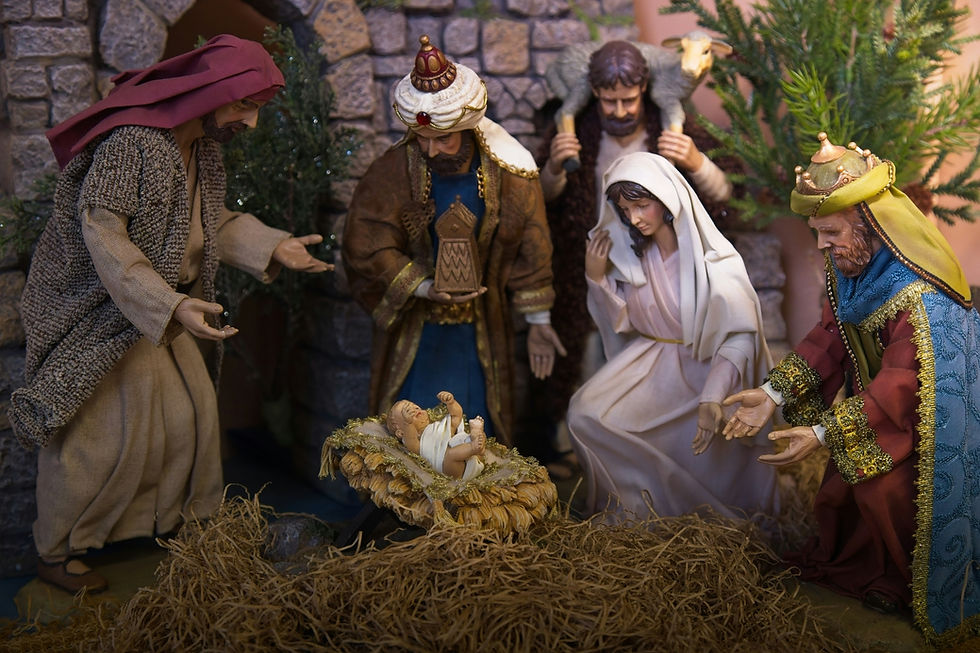
At the first Christmas, the profoundest and most unfathomable depths of the Christian revelation lie. God became man (John 1:14); the divine Son became a Jew; the Almighty appeared on earth as a helpless human baby. The more you think about it, the more staggering it gets.
How are we to think of the incarnation: The New Testament encourages us to worship God for the love that was shown in it. For it was a great act of condescension and self-humbling. “He, Who had always been God by nature,” writes Paul, “did not cling to His prerogatives as God’s equal, but stripped Himself of all privilege by consenting to be a slave by nature and being born as mortal man. And, having become man, He humbled Himself by living a life of utter obedience, even to the extent of dying, and the death he died was the death of a common criminal” (Phil. 2:6, phillips). And all this was for our salvation.
The key text in the New Testament for interpreting the incarnation is in the more comprehensive statement of 2 Corinthians 8:9. Here is stated the fact and meaning of the incarnation. The taking of manhood by the Son is set before us in a way that shows us how we should set it before ourselves and ever view it—not simply as a marvel of nature, but rather as a wonder of grace.
For the Son of God to empty himself and become poor meant a laying aside of glory; a voluntary restraint of power; an acceptance of hardship, isolation, ill-treatment, malice, and misunderstanding; finally, a death that involved such agony—spiritual, even more than physical—that his mind nearly broke under the prospect of it. It meant love to the uttermost for unlovely men, who “through his poverty, might become rich.” It is the most wonderful message that the world has ever heard or will hear.
We talk glibly of the “Christmas spirit,” rarely meaning more by this than sentimental jollity on a family basis. But what we have said makes it clear that the phrase should in fact carry a tremendous weight of meaning. It ought to mean the reproducing in human lives of the temper of him who for our sakes became poor at the first Christmas. And the Christmas spirit itself ought to be the mark of every Christian all the year round.
Taken from What “Christmas Spirit” Should Actually Mean by J. I. Packer, Copyright © December 13, 2024. Used by permission of Crossway, a publishing ministry of Good News Publishers, Wheaton, IL 60187, www.crossway.org


Comments